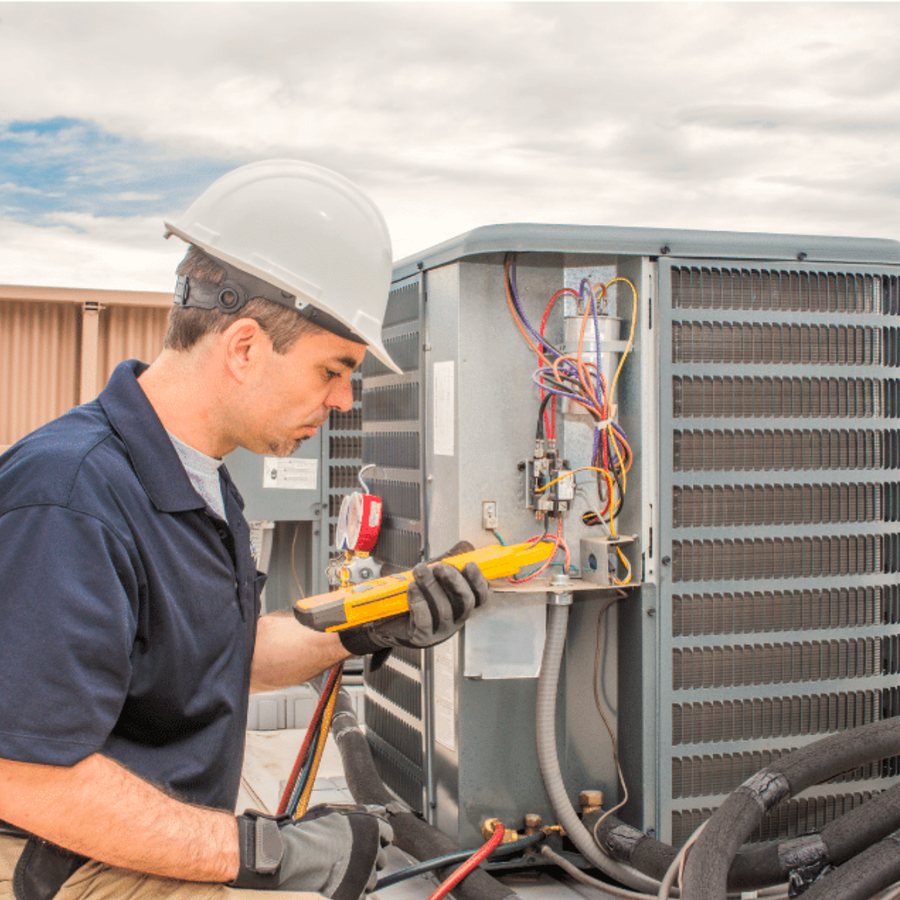
Request heat pump repair & installation for a property in Hamilton. Include the equipment, the problem or planned work, and your location so the request can be reviewed.
What findings distinguish a heat pump repair from a replacement installation?
A heat pump that does not heat or cool as expected, operates unevenly, or makes a new noise may have a control, airflow, defrost, or refrigerant-system fault. The equipment type, operating mode, outdoor-unit condition, and timing of the symptom help focus diagnosis. Repairing an existing system and installing a replacement are different scopes. If replacement is being considered, capacity and compatibility with existing ductwork or a ductless layout need assessment.
Record whether the problem occurs in heating, cooling, or both, and whether the outdoor coil is obstructed or frosting abnormally. The model, fault indications, sensor and defrost-control tests, refrigerant-system findings, and condition of major components shape repair scope. For replacement, compare the existing distribution system, required capacity, and ducted or ductless design before selecting equipment.
Heating and cooling diagnosis, sensors, defrost boards, and refrigerant faults
Outdoor-coil condition and defrost-cycle inspection
Cold-climate selection and ducted versus ductless installation
Assessment and Scope
Questions for the Proposed Work
01
Diagnose controls, sensors, and refrigerant faults
A heat pump that loses heating or cooling needs tests directed by its symptoms and control indications. Defrost boards and sensors can affect outdoor-coil operation, while a refrigerant-system fault has a different diagnostic path. The operating mode, outdoor-coil condition, and whether the indoor unit continues to run help distinguish these possibilities. Inspection findings should guide repair rather than treating every performance complaint as the same failure.
02
Check defrost operation and coil condition
In heating mode, the defrost cycle is part of normal heat-pump operation, but a control or sensor problem can disrupt it. Inspection can examine the outdoor coil, defrost controls, sensors, and the circumstances in which frost remains or operation changes. Maintenance checks should follow the manufacturer's instructions and observed condition. A specific defrost fault calls for repair, not an assumed routine adjustment or a blanket replacement.
03
Plan replacement around system type
If replacement is appropriate, compare standard and cold-climate equipment only in relation to the property's heating needs and the manufacturer's operating data. A ducted installation must suit the existing air distribution and controls; a ductless design needs appropriate head locations and zones. Capacity calculations and compatibility checks define the installation. For an existing unit, component condition and repair scope should also be compared before deciding to replace it.
Compare the next step
Organize the fault record by operating mode, outdoor conditions, and backup response. Ask what distinguishes the proposed diagnosis from previous assumptions. The service report should explain the cause, work performed, operating checks, and any remaining limitation so future assessment does not begin from an incomplete history.
Cold-climate capability does not prove that one model covers every home heating load. Ask how the selected equipment and supplementary heat meet the actual design requirements.